Care home marketing
Care home marketing is the work of being found, and being trusted, by local families at the moment they start looking. You cannot create that moment. What you can do is make sure that when it arrives for a family a few miles from your door, your home already exists in a form they believe. We make the film, run the advertising and build the path that brings them to you, and our fee follows a resident moving in.
Not persuade anyone to want a care home. Three jobs, in this order, and a home that gets all three right rarely has an occupancy problem.
The honest comparison
Every route below works. They differ in when they reach a family, and in what they can make her feel before she calls. In Care England and Log my Care's national study of 1,000 people who had arranged care, 55% used directories, 40% used online search and 38% relied on word of mouth.
| Route | When it reaches the family | What it does well | Where it stops |
|---|---|---|---|
| Directory listings | Once she is actively searching | High intent, ready-made audience, easy to start | You are one tile among ten, compared on stars and a price |
| Google and local search | Once she is actively searching | Captures the families who type your town into a search box | Takes months to build, and the top of the page is often paid for |
| Word of mouth and referrals | Whenever it happens to happen | Carries more trust than anything you can buy | You cannot turn it up when you have beds open this quarter |
| Paid social with a family's story | While she is quietly weighing it up, before she searches | She feels your home before she ever compares it on a list | Needs something genuinely worth watching, which takes a day of filming |
| Your own website | Right after every one of the above | The one place you control completely, and where the enquiry happens | Does nothing on its own if nobody arrives at it |
Being found is the easy half. Being believed is the half that fills beds.
Why it is its own discipline
Get these wrong and even well-made advertising quietly fails, or worse, offends.
A family starts looking when a relative's needs change, not because an advert persuaded them. The job is not persuasion. It is already existing, in a form they trust, when the moment arrives.
The person researching and calling is usually a close family member: most often an adult son or daughter, but frequently a spouse, a sibling, a niece or nephew, or a grandchild. Write for the reader without ever losing sight of the resident.
Families arrive carrying guilt and exhaustion. Marketing that leans on that feeling produces a flinch, not an enquiry. Marketing that ends on reassurance is the only kind that works here.
How we do it
Four steps, and we handle everything in between. You keep running your home.
One day at your home, capturing a real family's story, your manager's story and the ordinary moments of daily life. Real people, never AI, with consent handled properly throughout.
We shape a cinematic hero film and a set of shorter pieces, handling every emotion with care, and ending where it should end, on relief rather than fear.
We launch on Meta to the local families quietly making the decision now, and keep refining who sees it. You control your own advertising budget throughout.
Enquiries arrive through a simple, kind path to your door, and our fee follows a resident actually moving in.
The difference it makes
It comes down to two things: the most trusted voice in care, and reaching families at the moment they are quietly deciding.
On a list
On Google and the directories, your home is one tile among ten, judged on stars and a price, in a bidding war usually won by whoever spends the most. This still works, and you should still be there. It just has a ceiling, and the ceiling is that nobody feels anything about your home before they compare it.
Who this is for
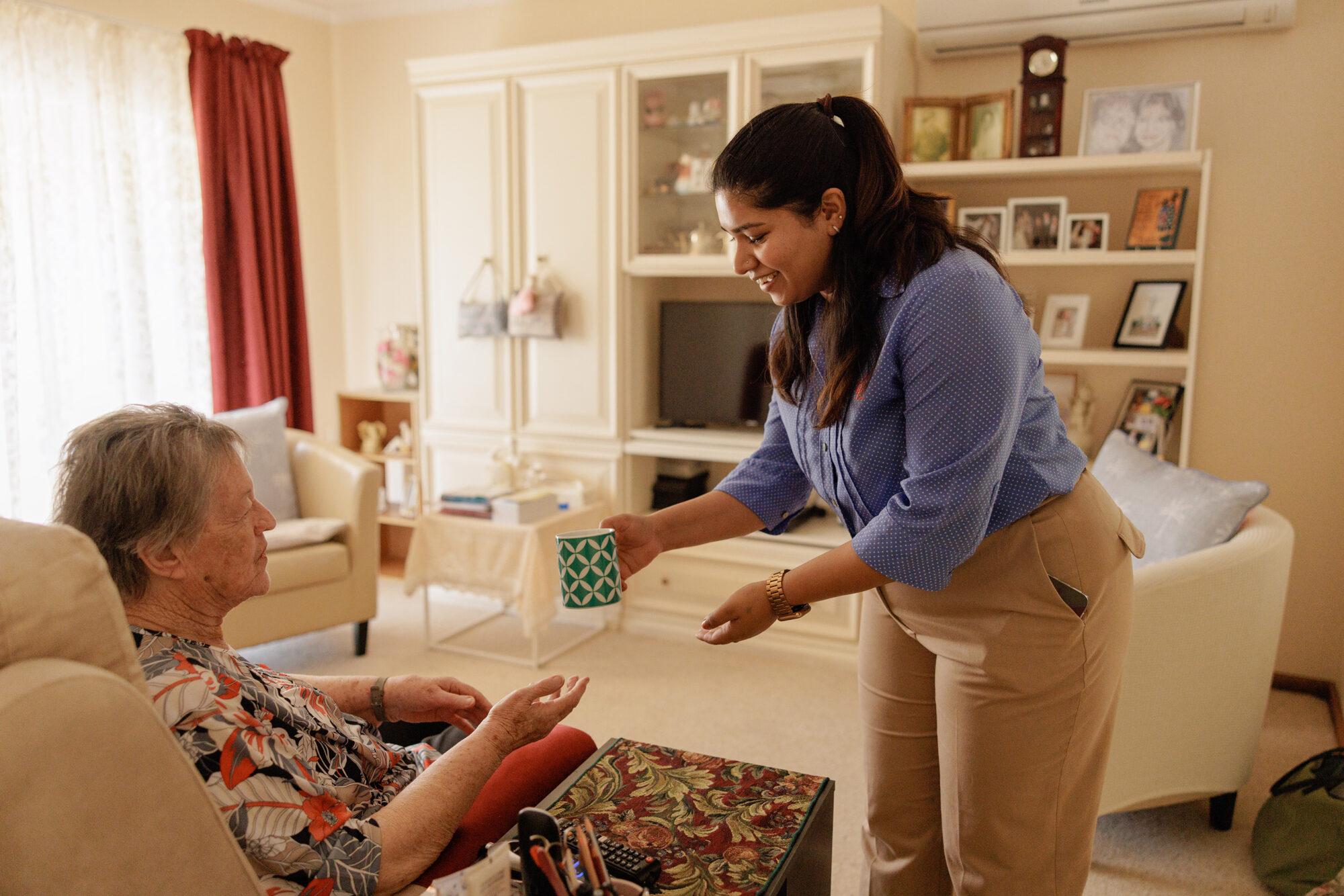
This is for homes with private beds to fill in a catchment where families have real choice. It is most valuable to a home that is genuinely good and quietly invisible, which is a more common problem than most owners expect. CQC's State of Care 2024/25 recorded 84% of care home beds occupied in England, up from 78% in 2021/22, with London highest at 87%. The homes with empty beds are increasingly the ones with a visibility problem rather than a market problem.
It is not for a home that is consistently full, or one whose beds fill through local authority placement with little private enquiry. Keeping your presence and reputation in good order is enough there, and campaign work is premature.
And one honest limit. Marketing does not fix a home that is not good. It makes a good home visible to the families who would choose it if they knew it existed. If you are not sure which problem you have, start with why families may not be finding your care home online.
Why us
We make the film, run the advertising and build the path, and we carry the risk with you.
Common questions
Care home marketing is the work of making sure local families find your home, and trust it, at the moment they start looking for care. It covers your website and local search visibility, your reputation and reviews, paid advertising, video and photography of daily life, and the speed and warmth of your response when an enquiry arrives. Unlike most marketing it does not create demand, because families begin looking when a relative's needs change, not because an advert persuaded them.
Three things working together: being visible in the places families look, giving them an honest picture of daily life so they can imagine someone they love living there, and responding quickly and warmly when they get in touch. Care England and Log my Care found reputation was the biggest factor in the final decision at 30 per cent, ahead of safety and safeguarding at 29 per cent, while only 19 per cent of families used inspection reports at all.
Paid social and paid search can produce enquiries within the first few weeks, because they reach families already in the window. Search visibility, reviews and referral relationships build over months and then keep paying. A sensible plan runs both: something that reaches families this month, and something that compounds so you are not starting from nothing next year.
It depends on the model rather than a single number. You will be offered a monthly retainer, a project fee, a percentage of media spend, or payment tied to a result such as an enquiry or a move-in. Heritage works on results rather than a standing retainer: you control your own advertising budget and our fee follows a resident actually moving in. The specifics are walked through on a call.
A full home still needs presence, because occupancy is never permanent and the families deciding next year are forming impressions now. What a full home does not need is a growth campaign. Keeping the website current, the Google Business Profile accurate and the reviews answered is usually enough until beds open up.
Read further
Written for owners and managers, not for search engines. How care home marketing works, what makes it different from marketing in any other sector, whether traditional marketing still earns its place, and the routes to occupancy in the order a home should work through them.